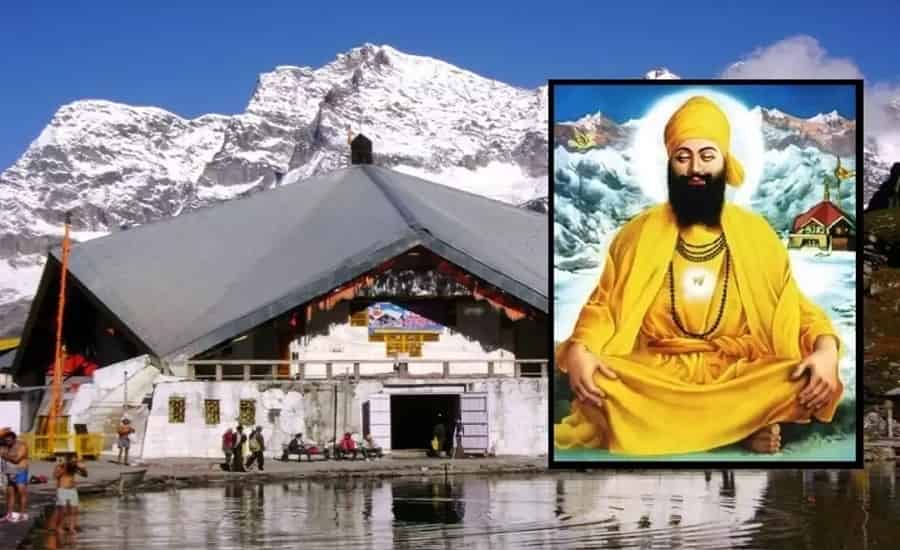
Hemkund Sahib yatra opened on 23 May and is scheduled to close on 10 October — both dates confirmed by the Gurdwara Shri Hemkund Sahib Management Trust, not estimates.
Quick Facts
| Location | Chamoli district, Uttarakhand |
| Altitude | About 4,329 m, per Uttarakhand Tourism and Incredible India. Some sources list figures closer to 4,570–4,630 m — the government tourism figure is the one we go with. |
| 2026 season | 23 May – 10 October |
| Govindghat to Ghangaria | About 13 km |
| Ghangaria to Hemkund Sahib | About 6 km, roughly 1,100 m of climbing |
| Overnight stay at Hemkund | Not available. Base yourself in Ghangaria. |
| Return by | Around 2 PM, per Chamoli district administration guidance |
The Season Is Short, and That’s the Point
Hemkund Sahib is open for roughly four and a half months a year. Outside that window — October through April, broadly — the route is snowbound and closed, full stop. There’s no shoulder-season workaround. The Trust sets the opening date each spring once snow clearance on the Ghangaria–Hemkund stretch is done, and closes it again before the first real winter storm hits. In 2026 that meant 23 May to 10 October. Next year the dates will shift slightly depending on how the snow behaves.

Weather by Season
Late May to June
This is the opening stretch, and it doesn’t feel like summer anywhere else does. Snow is still melting near the lake into early June, so parts of the trail stay icy even after the shrine technically opens. Mornings are cold and clear; afternoons bring wind that picks up fast. Pack like it’s winter, because at this elevation, it still is.
July and August
The monsoon runs through here hard. Rain is heaviest in these two months, and the Rishikesh–Joshimath highway sees regular landslide alerts during this stretch — that affects your approach to Govindghat as much as the trek itself. Trails get slippery. Visibility drops. This also happens to be when the Valley of Flowers is at its most colourful, so a lot of people accept the rain trade-off deliberately. If you’re one of them, build a buffer day into your plan.
September and October
Rainfall drops off noticeably here, and it’s why a lot of people — including us — point travellers toward September first. Skies clear more often, the lake looks its best, and the surrounding peaks actually stay visible instead of vanishing into cloud. That said, nights turn colder fast through September, and snow can return earlier than expected by late in the month. The season closes around the first or second week of October for exactly that reason.
November to April
Closed. Continuous snowfall, a frozen lake, and a route that isn’t walkable. The Gurudwara doors stay shut until the Trust makes the next opening announcement, usually sometime in spring.
On Temperature — a Deliberate Omission
Every published source gives a different number for what Hemkund Sahib actually feels like month to month, and none of them cite a weather station you can check. One site says June days run 10–20°C. Another says September is 5–15°C. A third gives entirely different ranges for the same months. Rather than pick one and present it as fact, we’re skipping exact figures here. What’s consistent across every source: cold mornings and nights year-round, rapid swings within a single day, and conditions that can turn from clear to sleet with very little warning. Pack for that, not for a number on a page.
Why It Feels Colder Than Ghangaria
Ghangaria sits at roughly 3,050 m. Hemkund Sahib is close to 4,330 m. That’s over 1,200 metres of elevation gained in a 6 km climb, which is why the temperature drop between the two feels so sudden — it’s not your imagination, and it’s not really “weather” in the usual sense. It’s altitude doing what altitude does.
Altitude Is the Real Risk, Not Just the Cold
At over 4,300 m, oxygen levels are meaningfully lower than what most pilgrims are used to. Breathlessness and fatigue on the final climb are normal. Headache, dizziness, nausea, or breathlessness that gets worse rather than better are different — those are signs of altitude illness, and they shouldn’t be pushed through. If you or anyone in your group shows these signs, the right move is to stop, rest, and if needed, descend. Follow guidance from your guide or on-site medical staff rather than trying to power through.
Hemkund Sahib vs Valley of Flowers Timing
Both treks share the same approach through Govindghat and Ghangaria before splitting off. The Valley of Flowers blooms from July through September, which overlaps almost the entire Hemkund Sahib season. If flowers are your priority, July–August is stronger. If stable, drier trekking conditions matter more to you, September wins. You genuinely can’t optimise for both at once — pick based on what you care about more this trip.
Getting There: Distance, Explained Properly
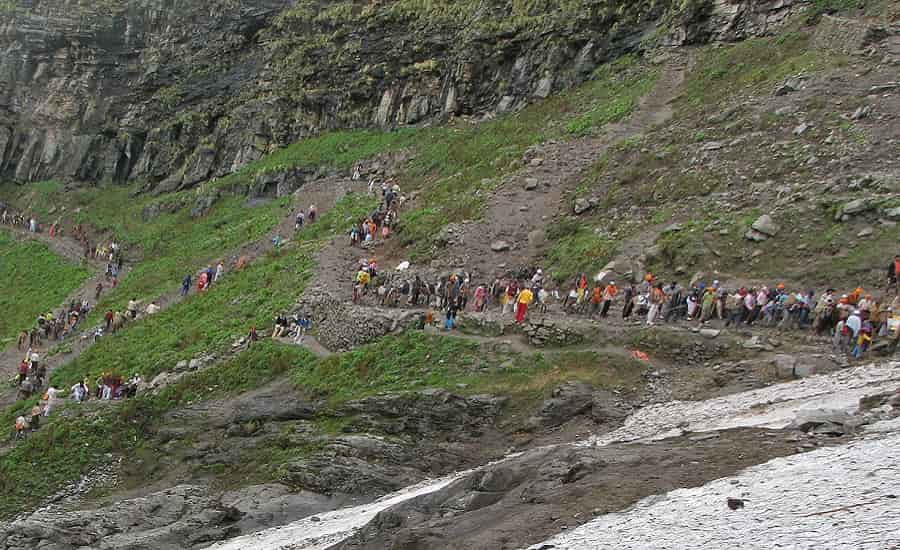
You’ll see 19 km, 20 km, and 21 km all quoted for the Govindghat-to-Hemkund route, and none of them are wrong exactly — they’re measuring slightly different things. The consistent part: about 13 km from Govindghat to Ghangaria, then a steep 6 km climb from Ghangaria to the shrine. Some pilgrims take a road transfer from Govindghat to Pulna first, which shortens the walking distance on the first leg. If a page gives you one suspiciously precise total, ask what it’s counting.
No Overnight Stay — Plan Around It
There’s no accommodation at Hemkund Sahib itself. None. Ghangaria is where you base yourself, and the Chamoli district administration’s guidance is to start heading back down by around 2 PM — not because of a rule written for its own sake, but because there’s nowhere to wait out a bad evening up there and the descent takes real time.
Packing for the Weather You’ll Actually Get
- A proper windproof outer layer, not just a fleece
- Thermals and a warm cap — nights are cold even in the “warm” months
- Gloves and a spare pair of socks
- Trekking shoes with real grip, already broken in
- Sunglasses and sunscreen — UV exposure at this altitude burns fast, cloud cover or not
- A rain poncho if you’re travelling July or August
Best Time to Go, Our Honest Take
September first, if your dates are flexible. Rainfall is lower, visibility is better, and the trail is less crowded than peak monsoon months. Late May and early June work if you want to see lingering snow and don’t mind icy patches near the top. July and August are the call only if the Valley of Flowers matters more to you than clear skies — go in with that trade-off understood, not as a surprise.
Sources Checked
Chamoli District Administration, Uttarakhand Tourism, Incredible India (Ministry of Tourism), and public statements from the Gurdwara Shri Hemkund Sahib Management Trust. Where these disagreed — mainly on altitude and total trek distance — we’ve said so rather than picking a number and presenting it as settled.
FAQs
When did Hemkund Sahib open in 2026?
23 May 2026, confirmed by the Management Trust.
When does it close?
10 October 2026 for this season. Future years shift depending on snowfall.
What’s the altitude?
About 4,329 m per Uttarakhand Tourism. A few other sources list it slightly higher.
Can I stay overnight at Hemkund Sahib?
No. Base yourself in Ghangaria.
What’s the trek distance from Govindghat?
About 13 km to Ghangaria, then a steep 6 km climb to the shrine.
Which month has the best weather?
September, generally — lower rainfall and better visibility than the monsoon months.
Is July–August worth it despite the rain?
Only if the Valley of Flowers is a priority for you. The rain is real.
Is Hemkund Sahib open in June?
Yes, though snow can still linger near the lake into early June.
Do I need to worry about altitude sickness?
Yes, more than the cold. Watch for headache, dizziness, or worsening breathlessness, and don’t push through it.
What time should I start the final climb?
Early morning. The district administration’s guidance is to be heading back down by around 2 PM.
Also Read

Related Posts
How to Reach Hemkund Sahib
Best Time to Visit Hemkund Sahib