
Uttarakhand didn’t get the nickname “Devbhoomi” — Land of the Gods — by accident. Almost every valley here hides a temple, and almost every temple hides a story that’s older than most written history. From the ice-bound sanctum of Kedarnath to a roadside ashram that changed Steve Jobs’ life, the temples in Uttarakhand aren’t just religious stops — they’re the reason this state feels different from anywhere else in India.
This guide covers 23 temples and shrines across Garhwal and Kumaon — full Char Dham temples, Panch Kedar and Panch Badri shrines, folk-deity temples, and ashram complexes alike — grouped by region so you can plan a route instead of jumping around a random list. Along with legends and history, you’ll find current timings, best months to visit, and the practical details most temple guides skip, with every changeable fact checked against official tourism and temple sources rather than assumed.
Quick Answer: The most prominent temples in Uttarakhand are Badrinath and Kedarnath, the state’s best-known Char Dham shrines, followed by Kainchi Dham, Naina Devi, Neelkanth Mahadev, and Mansa Devi. For the high-altitude Char Dham and Panch Kedar temples, May–June and September–October are generally the most reliable windows — each shrine operates seasonally, opening in spring and closing before winter, with exact dates set year to year. Lower-altitude temples near Haridwar, Rishikesh, and in Kumaon stay open year-round.
Understanding Uttarakhand’s Temple Circuits First
Before jumping into the list, it helps to know that many of these temples aren’t standalone — they belong to specific pilgrimage circuits. Knowing this saves confusion later.
- Char Dham Yatra: The four holiest shrines of Uttarakhand — Yamunotri, Gangotri, Kedarnath, and Badrinath. Only open April/May to November.
- Panch Kedar: Five Shiva temples linked to the Mahabharata legend of the Pandavas — Kedarnath, Tungnath, Rudranath, Madhyamaheshwar, and Kalpeshwar.
- Panch Badri: Five Vishnu temples — Badrinath, Yogadhyan Badri, Bhavishya Badri, Vridha Badri, and Adi Badri.
- Shakti Peeths: Temples believed to mark where parts of Sati’s body fell, per Hindu legend. Mansa Devi (Haridwar) is widely counted among these. Naina Devi in Nainital carries the same “Sati’s eyes” legend locally, though the Naina Devi most classical Shakti Peeth lists cite by name is a separate shrine in Bilaspur, Himachal Pradesh — worth knowing so you don’t confuse the two.
With that context, here’s the full list, organized region by region.
Part 1: Char Dham & Panch Kedar Temples (Garhwal Himalayas)
1. Badrinath Dham (Chamoli)
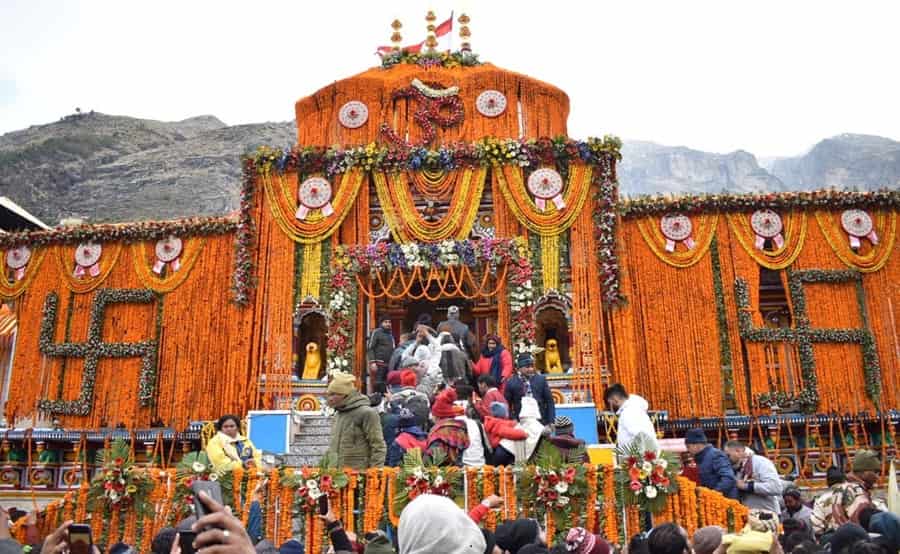
Badrinath Dham sits at roughly 3,133 metres (10,279 ft) on the banks of the Alaknanda River — the figure Incredible India’s official listing uses, though older references sometimes round it to 3,100 m. Dedicated to Lord Vishnu, it’s one of the most revered shrines in the all-India Char Dham circuit, the Chota Char Dham, and the Panch Badri Yatra. The temple is flanked by the Nar and Narayan mountain ranges, with Neelkanth peak towering behind it. Its stone architecture, arched entrance, and gold-capped roof make it instantly recognizable among Himalayan shrines. For most pilgrims, Badrinath marks the final and most significant stop of the Char Dham journey.
- Deity: Lord Vishnu (Badrinarayan)
- Weather: High-altitude Himalayan climate; shut through winter, with roads snowbound
- Timings: Typically 4:30 AM–1 PM and 4 PM–9 PM in season; confirm current-year timings on the official Char Dham portal before travelling
- Best Time to Visit: May–June, Sept–Oct
- Entry Fee: Free (registration mandatory)
- How to Reach: Rail — Rishikesh; Air — Jolly Grant, Dehradun
- 2026 Opening: 23 April 2026
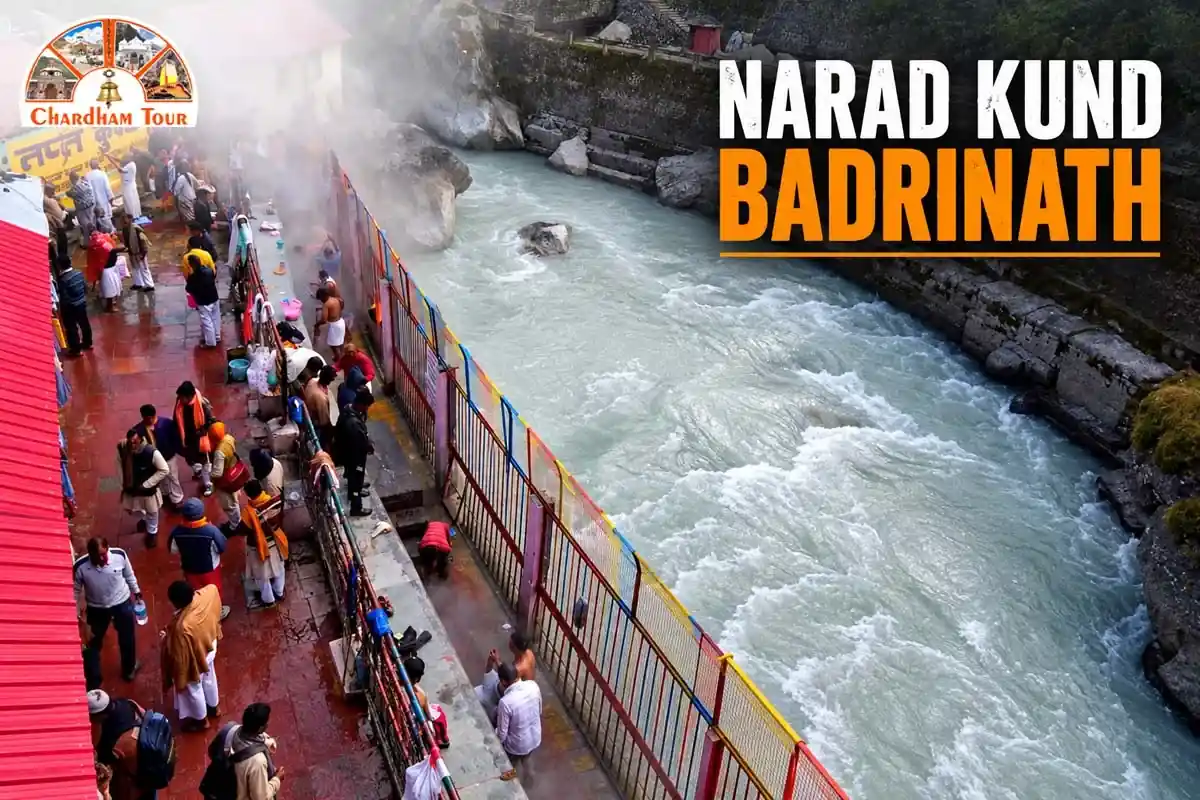
- Things to Do: Vasudhara Falls, Narad Kund, Mana Village. Valley of Flowers and Hemkund Sahib are a separate trek circuit accessed from Govindghat, not a same-day add-on
- Travel Tip: Carry heavy woollens — mornings stay near freezing even in summer
2. Kedarnath Dham (Rudraprayag)
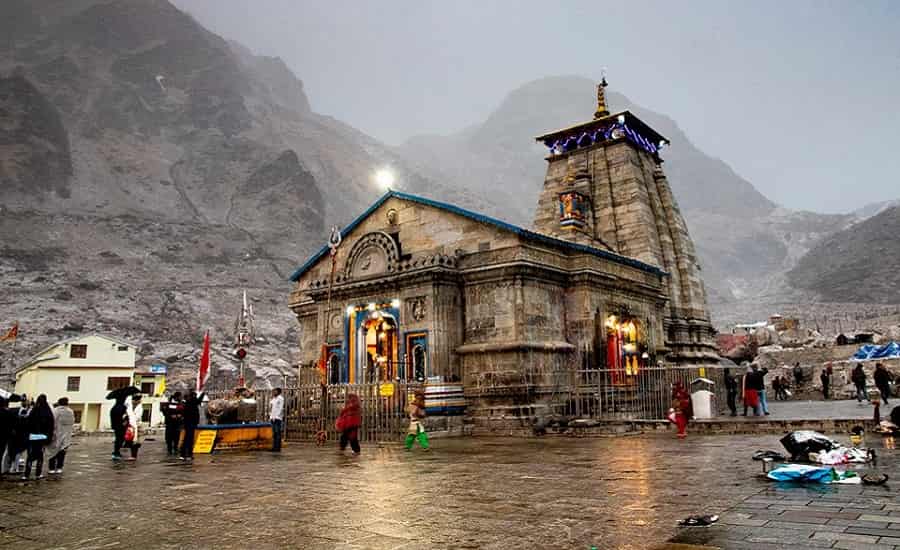
Dedicated to Lord Shiva as Kedar Khand’s presiding deity, Kedarnath sits at 3,583 metres (11,755 ft) — sources vary between 3,580 and 3,583 m, but the difference is trivial for planning purposes. It’s the highest-altitude of the twelve Jyotirlingas, and forms part of both the Char Dham Yatra and the Panch Kedar Yatra. The temple is traditionally associated with Adi Shankaracharya’s revival efforts, though its exact original construction date isn’t firmly established — treat that as tradition, not settled history. A helicopter option exists for the trek from Gaurikund, though seats sell out fast in peak season. Adi Shankaracharya’s samadhi sits just behind the main shrine.
- Deity: Lord Shiva (Jyotirlinga)
- Weather: Cold year-round, heavy snow and closed in winter
- Timings: Vary by season and ritual schedule; check the official portal before travelling rather than relying on a fixed year-round timing
- Best Time to Visit: May–June, Sept–Oct
- Entry Fee: Free (registration mandatory)
- How to Reach: Rail — Rishikesh; Air — Jolly Grant; road-head — Gaurikund, then approximately 16–17 km on foot (sources differ slightly) or by helicopter
- 2026 Opening: 22 April 2026, ~8 AM
- Things to Do: Bhairav Mandir, Gaurikund, Adi Shankaracharya Samadhi, Vasuki Tal
- Travel Tip: Book helicopter tickets only through the official IRCTC HeliYatra portal — avoid unofficial sites and social-media payment links
3. Yamunotri Temple (Uttarkashi)
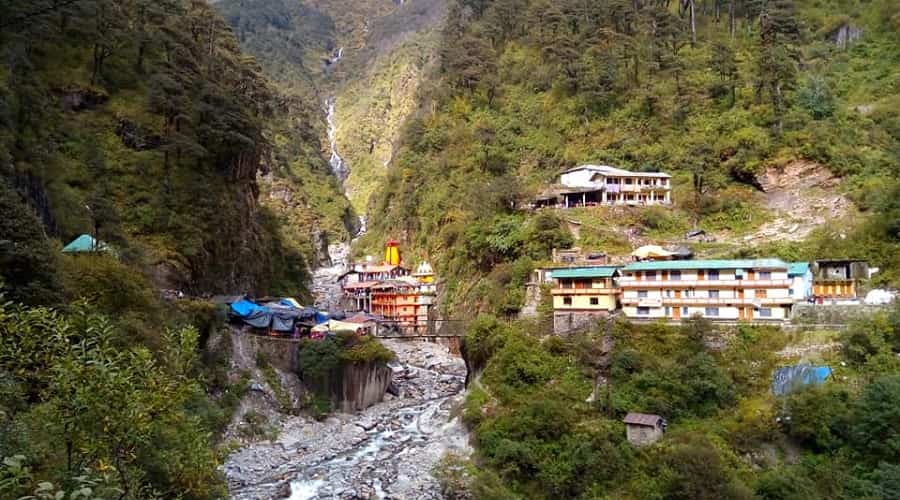
The westernmost of the four Char Dham shrines, Yamunotri sits at roughly 3,293 metres (10,804 ft) on a flank of the Bandarpunch massif, dedicated to Goddess Yamuna. The current structure was built by Maharaja Pratap Shah of Tehri Garhwal; the river’s actual glacial source, Champasar Glacier, sits far higher and isn’t accessible to pilgrims, which is why the shrine stands lower down. Two hot springs, Surya Kund and Gauri Kund, sit right by the temple — devotees traditionally cook rice and potatoes in Surya Kund’s boiling water as an offering. Since the Char Dham Yatra runs clockwise, most pilgrims visit Yamunotri first.
- Deity: Goddess Yamuna
- Weather: High-altitude Himalayan climate; closed through winter
- Timings: Not fixed months in advance; check the official portal closer to your travel date
- Best Time to Visit: May–June, Sept–Oct
- Entry Fee: Free (registration mandatory)
- How to Reach: Rail — Rishikesh; Air — Jolly Grant; road-head — Janki Chatti, then a 6 km trek
- 2026 Opening: 19 April 2026 (Akshaya Tritiya)
- Things to Do: Surya Kund hot springs, Divya Shila rock pillar
4. Gangotri Temple (Uttarkashi)
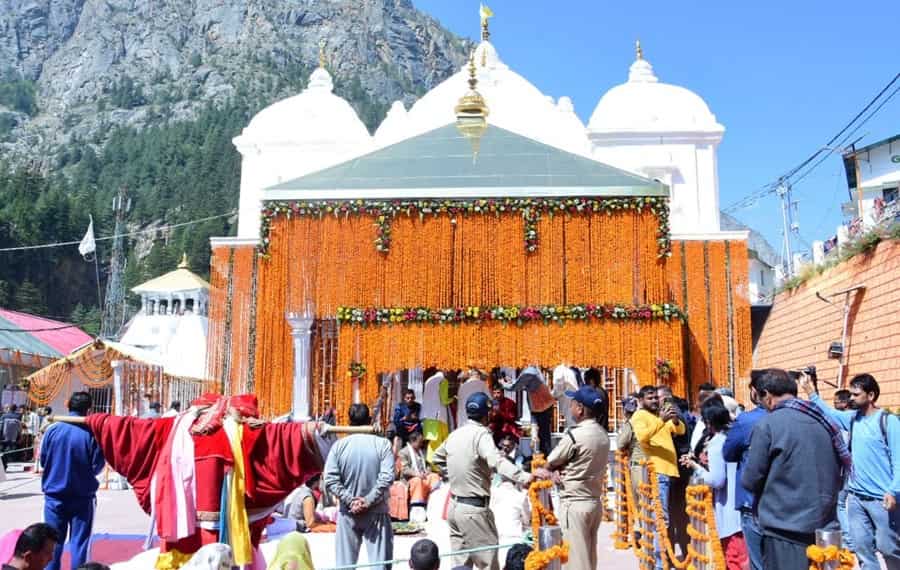
Dedicated to Goddess Ganga, Gangotri marks the spot where Hindu tradition holds the river descended from the heavens, caught in Shiva’s matted hair to soften its fall. The present white-granite temple was built by Amar Singh Thapa, a Gorkha commander, in the early 18th century, and later renovated by the royal family of Jaipur. Unlike the other three Char Dham shrines, Gangotri needs no trek — the temple sits right by the road, roughly 3,100 metres (10,200 ft) up. The river’s actual source, Gaumukh glacier, is a separate 18 km trek for those continuing further.
- Deity: Goddess Ganga
- Weather: High-altitude Himalayan climate; closed through winter
- Timings: Not fixed months in advance; check the official portal closer to your travel date
- Best Time to Visit: May–June, Sept–Oct
- Entry Fee: Free (registration mandatory)
- How to Reach: Rail — Rishikesh; Air — Jolly Grant; the temple itself needs no trek, road access all the way
- 2026 Opening: 19 April 2026 (Akshaya Tritiya)
- Things to Do: Gaumukh Glacier trek (separate, 18 km), Bhagirath Shila
5. Tungnath (Rudraprayag)
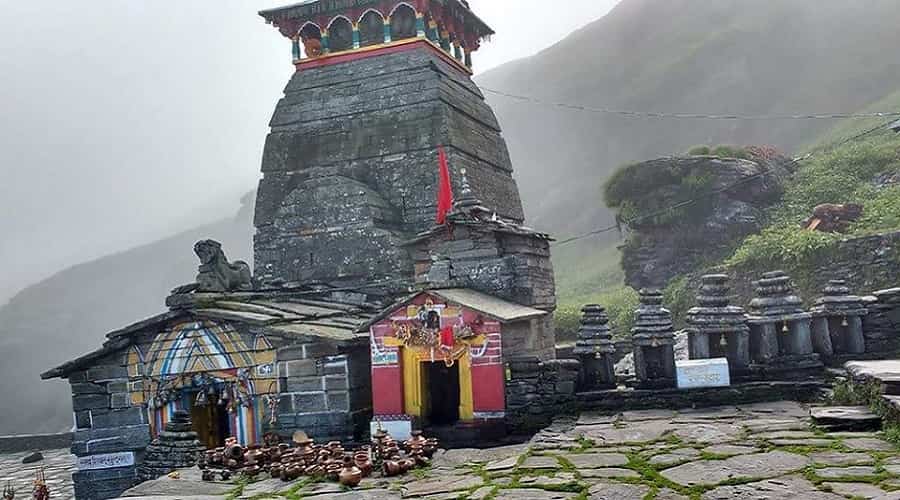
Missing from most Uttarakhand temple lists but essential to include: Tungnath is the highest Shiva temple in the world, sitting at about 3,680 metres, higher even than Kedarnath itself. It’s the second of the Panch Kedar temples and is reached via a scenic 3.5 km trek from Chopta, an area often nicknamed the “Mini Switzerland of India” for its rolling meadows and rhododendron forests. Legend holds the temple marks the spot where Shiva’s arm manifested after he fled the Pandavas in the form of a bull. Most visitors combine the temple visit with the onward trek to Chandrashila peak.
- Deity: Lord Shiva (Panch Kedar — arm)
- Weather: Cool summers, sub-zero snowy winters
- Timings: ~6 AM–7 PM in season
- Best Time to Visit: May–June, Sept–mid-Nov
- Entry Fee: Free
- How to Reach: Rail — Rishikesh; Air — Jolly Grant; road-head — Chopta (3.5 km trek)
- Things to Do: Chandrashila summit trek for 360° Himalayan views
6. Madhyamaheshwar Mandir (Rudraprayag)
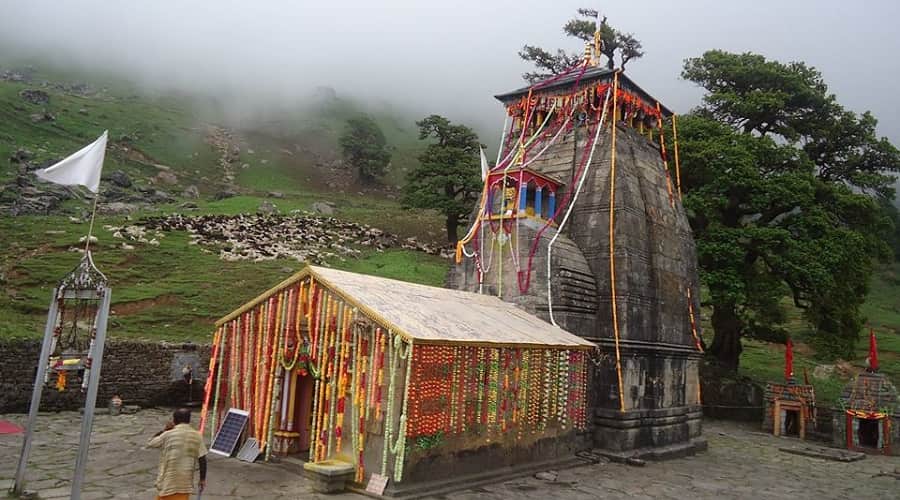
This Panch Kedar temple, dedicated to Lord Shiva, sits at 11,473 feet amid alpine meadows in the Garhwal region, reached via a roughly 24 km trek from the Ransi/Gaundhar base. Local belief holds that even a few drops of its holy water are enough for ablution, which is one reason the trek remains popular despite its remoteness. The Shiva Linga here is worshipped in navel-shaped form, one of five body-part representations across the Panch Kedar circuit. During winter, the presiding deity is moved down to Ukhimath, and the temple itself stays completely snowbound.
- Deity: Lord Shiva (navel-shaped Linga)
- Weather: Cool alpine summers, snowbound winters
- Timings: Daylight hours in season; not confirmed for fixed hours
- Best Time to Visit: May–October
- Entry Fee: Free
- How to Reach: Rail — Rishikesh/Haridwar; Air — Jolly Grant; road-head — Ransi/Gaundhar, then a ~24 km trek
- Things to Do: Kanchani Tal trek, Buddha Madhyamaheshwar, Omkareshwar Mandir
7. Yogadhyan Badri (Chamoli)
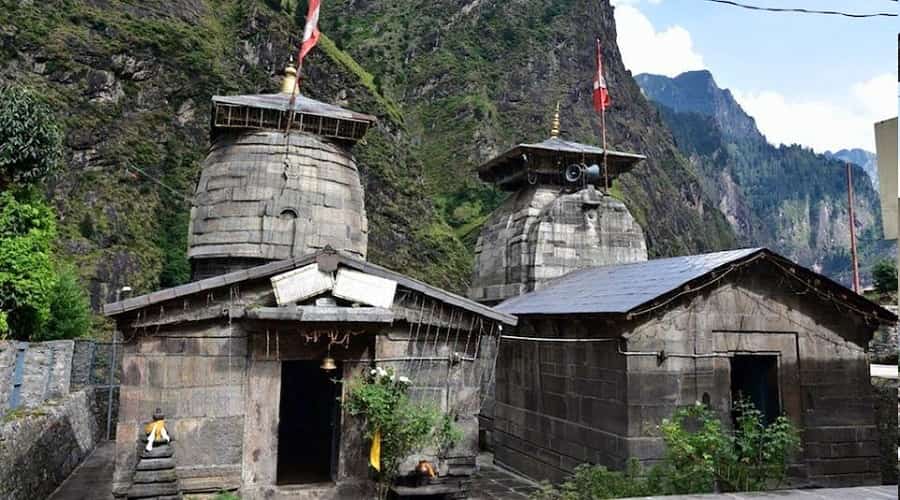
Part of the Panch Badri Yatra and located near Pandukeshwar, close to Badrinath, this temple sits at roughly 6,001 feet. Hindu tradition associates the site with King Pandu, who is said to have meditated here on Lord Vishnu, seeking forgiveness for killing two mating deer who were ascetics in a former life. The same tradition connects the spot to the birth of the Pandava brothers — a religious account rather than a historical record, but central to why the temple matters within the Panch Badri circuit. Since it sits so close to the main Badrinath route, most pilgrims add it as a short detour rather than a separate trip.
- Deity: Lord Vishnu (Panch Badri)
- Weather: Cool summers, closed in winter
- Timings: Daylight hours, Badrinath season
- Best Time to Visit: April–June, Sept–Oct
- Entry Fee: Free
- How to Reach: Rail — Rishikesh; Air — Jolly Grant; road via Pandukeshwar, about 4.5 km from Badrinath
- Things to Do: Combine with Badrinath, or trek toward Vishnuprayag
8. Mata Murti Mandir (Badrinath)
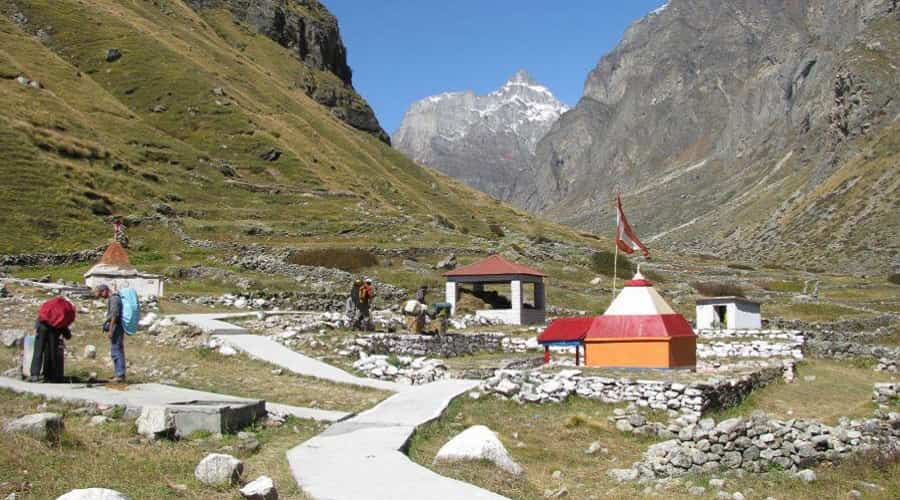
Located 3 km from the main Badrinath temple on the Alaknanda’s right bank, this shrine is dedicated to Mata Murti, mother of Nar and Narayan in Hindu mythology. It draws large crowds on the eve of Vaman Dwadashi and Shravan Dwadashi, when special rituals are performed in her honour. Most pilgrims visiting Badrinath make it a point to stop here as well, since it’s an easy add-on rather than a separate journey. The temple’s simplicity stands in quiet contrast to the grandeur of Badrinath just up the road.
- Deity: Mata Murti
- Weather: Cool summers, closed in winter
- Timings: Daylight hours, Badrinath season
- Best Time to Visit: April–May, Sept–Oct
- Entry Fee: Free
- How to Reach: 3 km from Badrinath; same rail/air access
- Things to Do: Mana Village, Surya Kund, Charan Paduka, Tapta Kund
Part 2: Gateway Temples Near Haridwar & Rishikesh
Most Char Dham pilgrims pass through Haridwar and Rishikesh without realizing three major temples sit right along the route. These are ideal additions to any Uttarakhand temple tour and don’t require a Himalayan trek.
9. Neelkanth Mahadev Temple (Rishikesh)
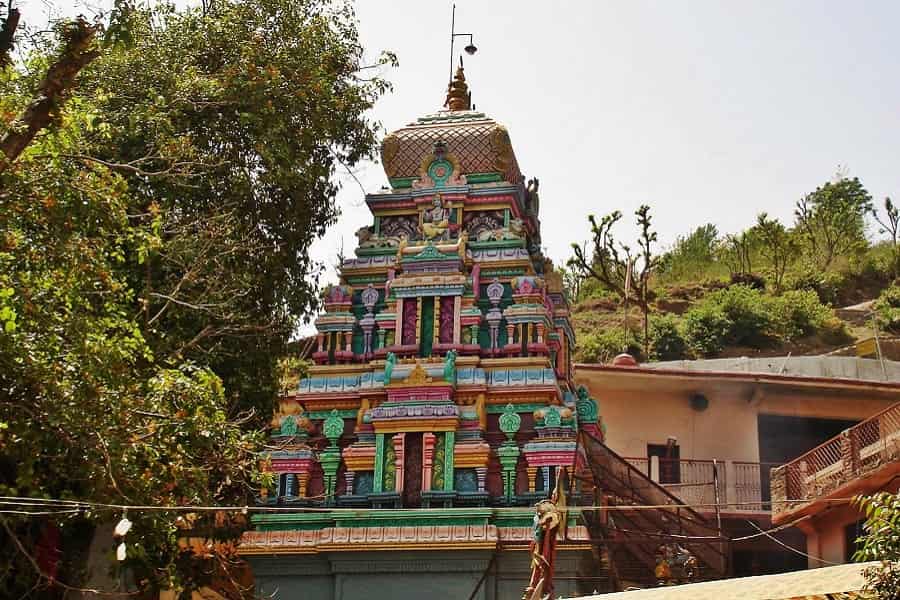
About 26–32 km from Rishikesh at an altitude of 1,330 metres, Neelkanth Mahadev marks the spot in Hindu mythology where Lord Shiva consumed the poison released during Samudra Manthan, the churning of the cosmic ocean. The poison turned his throat blue, earning him the name “Neelkanth” — the blue-throated one. The temple sits amid dense forest at the meeting point of the Manikoot, Brahmakoot, and Vishnukoot valleys. Devotees offer milk, honey, and bel leaves at the shrine, and the evening aarti here draws a steady stream of visitors year-round.
- Deity: Lord Shiva (Neelkanth)
- Weather: Warm, humid summers; mild winters
- Timings: ~5 AM–6 PM
- Best Time to Visit: Shravan (Jul–Aug), Maha Shivratri, or Oct–Mar for a quieter visit
- Entry Fee: Free
- How to Reach: Rail — Rishikesh; Air — Jolly Grant; taxi (1–1.5 hrs) or 12–14 km trek from Ram Jhula
10. Mansa Devi Temple (Haridwar)

Perched atop Bilwa Parvat on the Shivalik hills, Mansa Devi is one of Haridwar’s Panch Tirth — the five major pilgrimages within the city — and a Siddha Peetha believed to fulfil the sincere wishes of devotees. “Mansa” literally means “wish,” and the temple’s reputation for granting them draws steady crowds throughout the year. Its association with the broader Shakti Peeth tradition varies by which regional or devotional list you consult; Haridwar’s own Panch Tirth framework is the classification most consistently used for it. Most visitors reach the shrine by the Udan Khatola ropeway, though a foot trail also winds up the hillside for those who prefer to walk.
- Deity: Goddess Mansa Devi (Shakti, Siddha Peetha)
- Weather: Hot summers, cool Oct–Mar
- Timings: Seasonal — roughly 5 AM–10 PM in summer, 4 AM–9 PM in winter, with a short bhog break around 11 AM; confirm on-site
- Best Time to Visit: October–March; go early to skip queues
- Entry Fee: Free (ropeway paid separately, rates vary)
- How to Reach: Rail/Air — Haridwar/Jolly Grant; ropeway near Har Ki Pauri, or ~45–60 min trek
11. Chandi Devi Temple (Haridwar)

Across the Ganga from Mansa Devi, on Neel Parvat, Chandi Devi is dedicated to Goddess Chandi and is reached via its own ropeway from Chandighat or a moderate uphill trek. Legend holds that the goddess killed the demon general Chanda-Munda at this very spot, giving the temple its name. Dense forest surrounds the hill on the far side, home to elephants and other wildlife from the adjoining Rajaji National Park buffer. Most pilgrims visit both temples along with Har Ki Pauri in a single Haridwar day.
- Deity: Goddess Chandi Devi
- Weather: Hot summers, cool Oct–Mar
- Timings: Roughly 6 AM–8 PM; can shift on festival days
- Best Time to Visit: October–March
- Entry Fee: Free (ropeway paid separately)
- How to Reach: Rail/Air — Haridwar/Jolly Grant; ropeway from Chandighat, or ~3 km trek
- Travel Tip: Confirm same-day timing with both temples before setting out — bhog and ritual breaks aren’t always at fixed hours
Part 3: Kumaon Region Temples (Almora, Nainital, Bageshwar, Pithoragarh)
12. Kainchi Dham (Bhowali, Nainital)
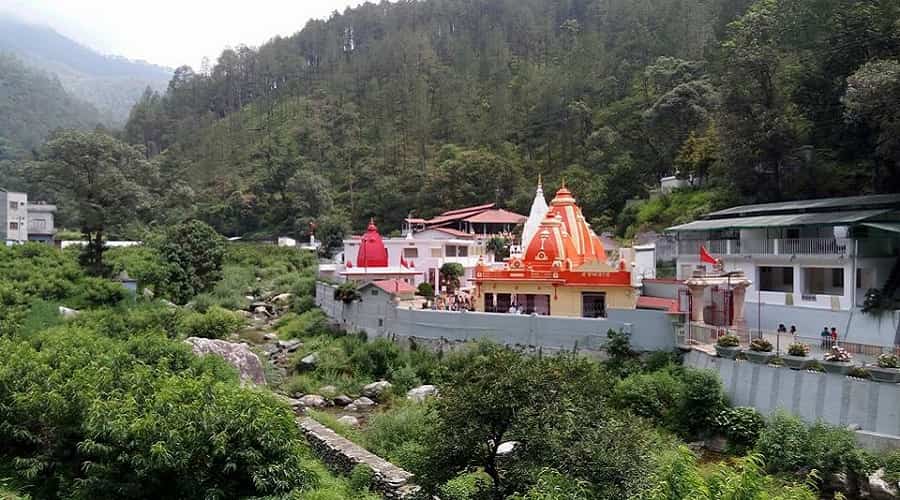
This riverside temple complex is both a Hanuman shrine and the ashram of Neem Karoli Baba (Maharaj-ji). Sources differ on the exact founding date: Uttarakhand Tourism dates the ashram to 1962, when Neem Karoli Baba first established himself here, while 15 June 1964 is the date most associated with the temple’s formal Pratishtha (consecration) — and it’s this date that draws enormous crowds every year for the annual Bhandara. The ashram gained global fame after Steve Jobs and Mark Zuckerberg both visited, and accounts of those visits continue to pull in travellers well beyond the devotee community. The Kosi River flows just below the complex. Tuesdays are considered especially auspicious, with kirtan running late into the evening.
- Deity: Lord Hanuman, with Neem Karoli Baba’s samadhi
- Weather: Pleasant summers, cold winters with light snow
- Timings: ~6 AM–6 PM (Tue till 9 PM for kirtan)
- Best Time to Visit: February–June
- Entry Fee: Free
- How to Reach: Rail — Kathgodam; Air — Pantnagar; ~9 km from Bhowali, ~17 km from Nainital
- Things to Do: Golu Devta Mandir, Shyamkhet Tea Gardens, Aurobindo Ashram
13. Naina Devi Temple (Nainital)
Sitting on the northern shore of Naini Lake, this temple gives Nainital its name and carries a strong local legend that Goddess Sati’s eyes fell here — the reason locals often call it a Shakti Peeth, even though the shrine most classical Shakti Peeth lists cite by this name sits separately in Bilaspur, Himachal Pradesh. The current structure was rebuilt in 1883 after an 1880 landslide destroyed the original shrine. The idol itself is unusual: Naina Devi is represented simply by two eyes, flanked by images of Kali and Ganesha. During the Nanda Ashtami festival, a grand procession carries the goddess’s idol through the town.
- Deity: Goddess Naina Devi (Shakti)
- Weather: Pleasant summers, cold winters with light snow
- Timings: ~6 AM–10 PM
- Best Time to Visit: May–June, Sept–Nov
- Entry Fee: Free
- How to Reach: Rail — Kathgodam; Air — Pantnagar; on Naini Lake’s north shore
- Things to Do: Naina Peak trek, Snow View Point, Nanda Ashtami procession
14. Baijnath Temple Complex (Bageshwar)
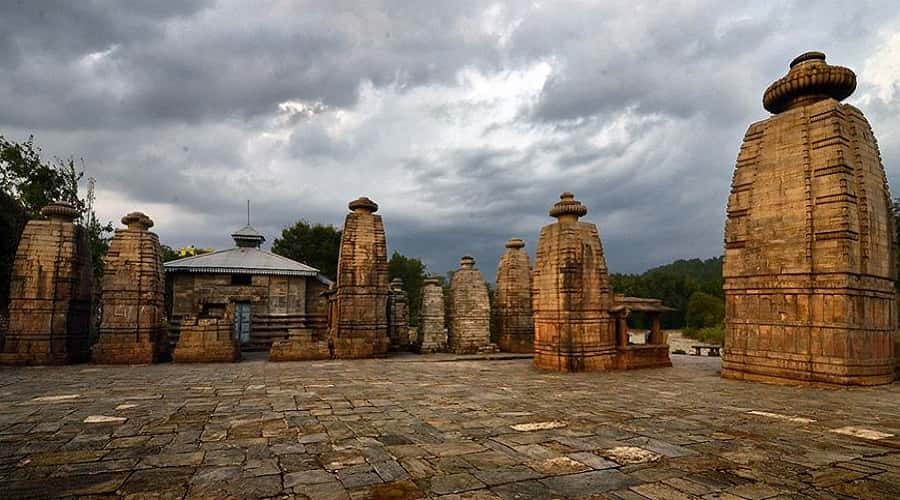
At 3,691 feet next to the Gomati River, this complex houses nearly 18 temples with 102 stone images, making it one of the richest historical temple clusters in Kumaon. It’s known for being one of the few sites where Goddess Parvati is depicted alongside Lord Shiva as a consort pair, rather than in separate shrines. The complex dates back several centuries and shows clear architectural influence from the Katyuri dynasty, which once ruled this part of Uttarakhand. Devotees throng the site heavily during Maha Shivratri and Makar Sankranti.
- Deity: Lord Shiva & Goddess Parvati (joint depiction)
- Weather: Mild summers, cold winters
- Timings: ~6 AM–7 PM
- Best Time to Visit: May–September
- Entry Fee: Free
- How to Reach: Rail — Kathgodam; Air — Pantnagar; beside the Gomati River in Baijnath town
- Things to Do: Bhramari Devi Temple, Garur market walk
15. Chitai Golu Devta Mandir (Almora)
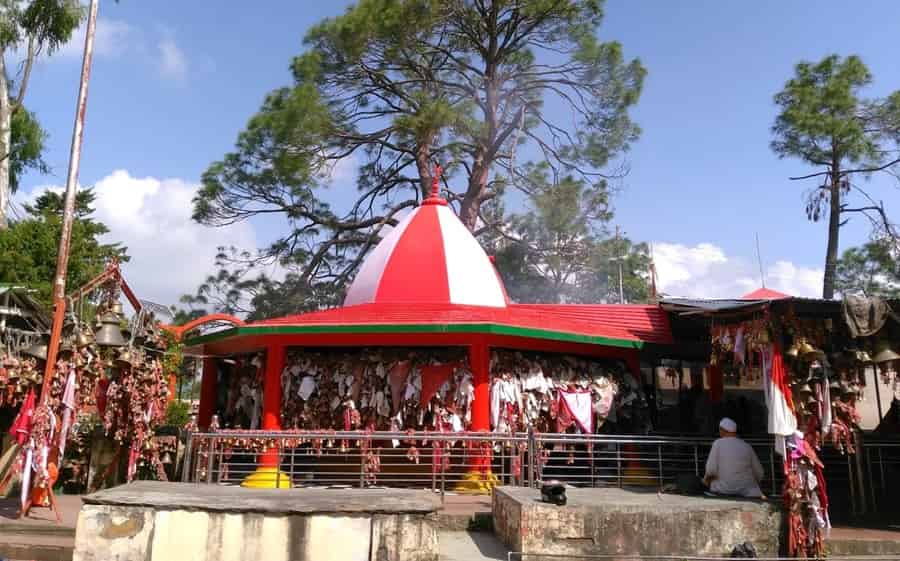
Dedicated to Golu Devta, a folk deity of justice worshipped mainly across Kumaon and eastern Garhwal, this temple is instantly recognizable by the thousands of bells devotees have tied here as wish offerings. Locals believe that a sincere prayer here, backed by a written petition tied among the bells, will eventually reach the deity and be answered. The temple sits close to the Binsar Wildlife Sanctuary’s main gate, surrounded by dense forest and panoramic Himalayan views. Its constant chime of bells in the wind gives the place a distinct, almost meditative soundscape. Read more..
- Deity: Golu Devta
- Weather: Pleasant summers, cold winters
- Timings: ~6 AM–7 PM
- Best Time to Visit: March–June, Sept–Nov
- Entry Fee: Free
- How to Reach: Rail — Kathgodam; Air — Pantnagar; ~9 km from Lala Bazar, Almora
- Things to Do: Mrig Vihar Zoo, Kalika Mandir, Sun Temple
16. Kasar Devi Mandir (Almora)
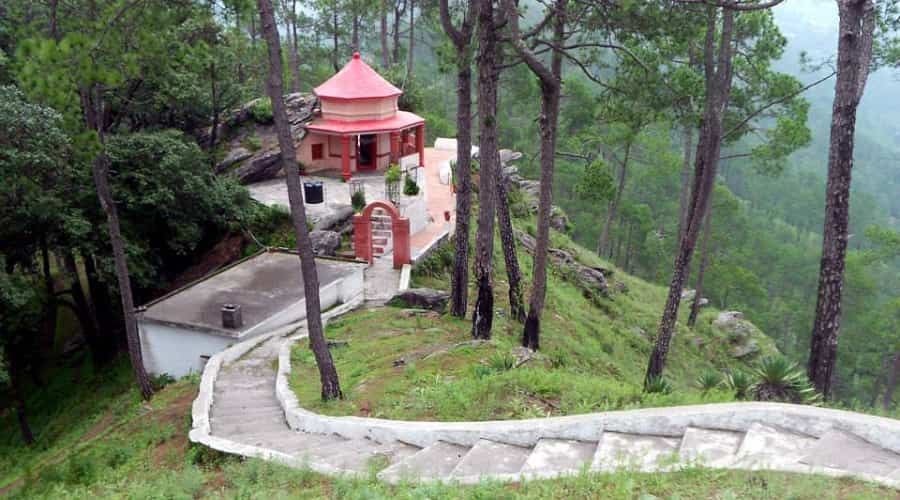
This roughly 2nd-century temple sits at 2,116 metres and has long attracted meditators, writers, and travellers drawn to its remote hillside setting. A local reputation for “unusual energy” has fuelled decades of interest, including a popular claim that NASA studied the site’s magnetic properties. No verified NASA study actually confirms this “Van Allen Belt” claim often repeated online, so it’s worth treating as folklore rather than established fact. What genuinely draws visitors, myth aside, is the striking 360-degree view and the quiet that settles over the ridge at dusk. Read more..
- Deity: Goddess Kasar Devi
- Weather: Mild summers, cold low-snow winters
- Timings: ~6 AM–7 PM
- Best Time to Visit: February–November
- Entry Fee: Free
- How to Reach: Rail — Kathgodam; Air — Pantnagar; ~8 km from Almora
- Things to Do: Crank’s Ridge, Nanda Devi Mandir trek, Binsar Sanctuary
17. Kamakhya Devi Mandir (Pithoragarh)
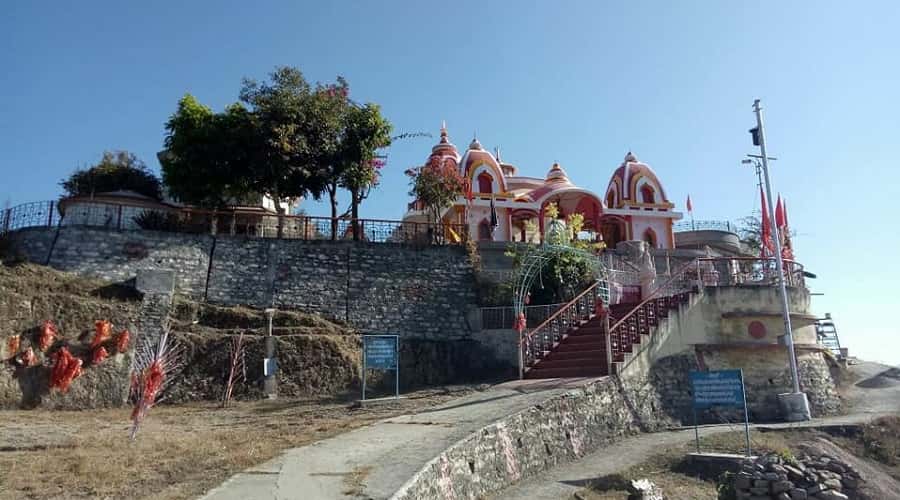
The only Kamakhya Devi temple in the Kumaon region, this shrine sits 7 km from Pithoragarh town amid sun-drenched, snow-clad mountain views and lush valley greenery. Devotees visit for blessings tied to marriage, family life, and general wellbeing — devotional beliefs rather than medical claims, and the temple should be understood in those terms. Its relatively remote location keeps crowds thin compared with more famous Uttarakhand shrines, which many visitors find adds to its peaceful atmosphere. Local families often combine a visit here with a wider tour of Pithoragarh’s forts and viewpoints.
- Deity: Goddess Kamakhya Devi
- Weather: Mild summers, cold winters
- Timings: ~6 AM–7 PM
- Best Time to Visit: April–June
- Entry Fee: Free
- How to Reach: Rail — Tanakpur; Air — Pantnagar; ~7 km from Pithoragarh town
- Things to Do: Maharaja Park, Pithoragarh Fort, Dhwaj Mandir
18. Nanda Devi Mandir (Pithoragarh — Munsiyari)
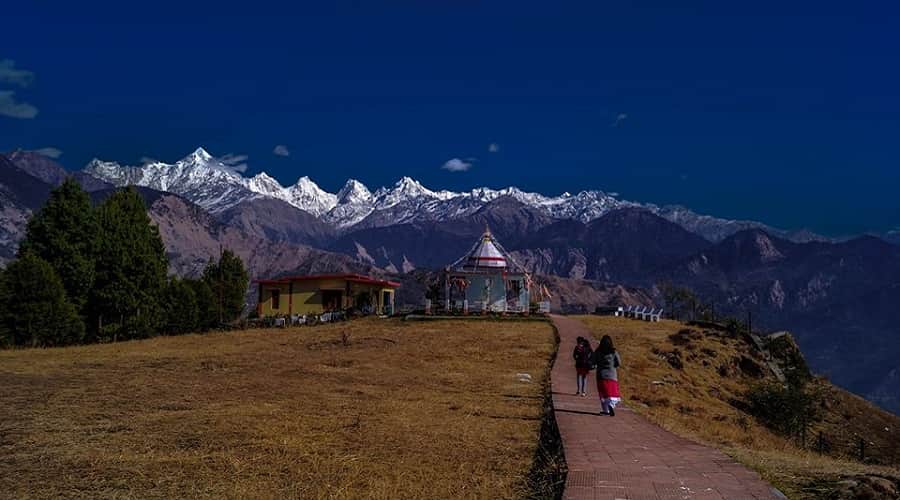
At 7,500 feet, this temple honours Goddess Nanda, a form of Parvati, and sits about 3 km from Munsiyari town, with the final stretch to the shrine a short walk or trek from the road rather than a long climb. Munsiyari itself is a well-known gateway for Himalayan trekkers, so the temple often gets combined with longer wilderness itineraries. The approach passes through pine forest that opens into alpine grassland, which is part of the appeal even for visitors who aren’t planning a bigger trek. Locals consider the walk an easy one, suitable for most fitness levels.
- Deity: Goddess Nanda (Parvati)
- Weather: Cool summers, snowy cold winters
- Timings: Daylight hours
- Best Time to Visit: May–October
- Entry Fee: Free
- How to Reach: Rail — Kathgodam; Air — Pantnagar; road to Munsiyari, then a short walk from the road
- Things to Do: Tribal Heritage Museum, Birthi Falls, Maheshwari Kund
19. Jhula Devi Mandir (Ranikhet)
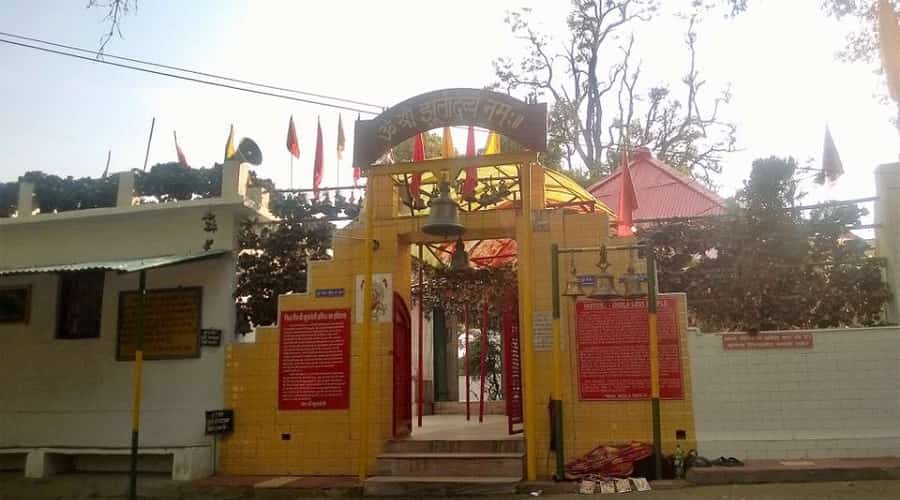
This temple 7 km from Ranikhet is dedicated to Durga Maa and is covered almost entirely in brass bells, offered by generations of devotees. According to local tradition, as recorded by the Almora district administration, the temple is around 700 years old — a figure worth treating as local belief rather than an archaeologically dated fact, since no firm construction record exists. Farmers from nearby villages still visit believing the goddess protects their livestock and cattle from leopards and other wildlife in the surrounding forest. The sound of thousands of bells shifting in the breeze is one of the temple’s most distinctive features.
- Deity: Durga Maa
- Weather: Pleasant summers, cold winters
- Timings: ~6 AM–7 PM
- Best Time to Visit: March–June, Sept–Feb
- Entry Fee: Free
- How to Reach: Rail — Kathgodam; Air — Pantnagar; ~7 km from Ranikhet
- Things to Do: Haidakhan Mandir, Chaubatia Gardens
20. Hanuman Garhi (Nainital)
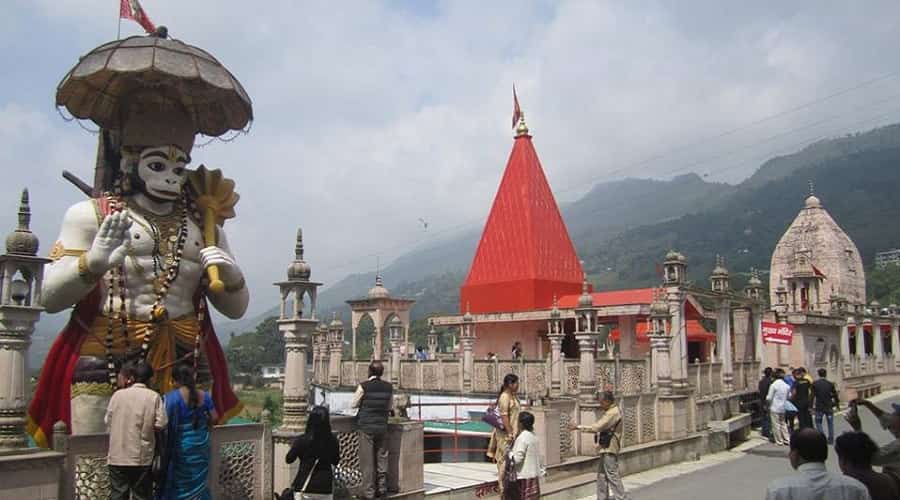
Built by Neem Karoli Baba in the 1950s at 6,401 feet, this temple sits a short distance — figures range from about 2 to 3.5 km depending on the starting point — from Nainital’s main bus stand, and is known for its sunrise and sunset views over the surrounding valley. As the name suggests, it’s dedicated to Lord Hanuman, and its strategic hillside position makes it one of the better vantage points in Nainital for watching the town’s lakes and hills catch the evening light. Beyond the darshan itself, it’s a popular short outing for visitors already staying in the main town.
- Deity: Lord Hanuman
- Weather: Pleasant summers, cold winters
- Timings: ~5 AM–9 PM
- Best Time to Visit: March–June, Sept–Dec
- Entry Fee: Free
- How to Reach: Rail — Kathgodam; Air — Pantnagar; roughly 2–3.5 km from Nainital, depending on the starting point
- Things to Do: Naukuchiatal Lake, Bhimtal Lake, Shitala Devi Mandir
21. Bagnath Temple (Bageshwar)
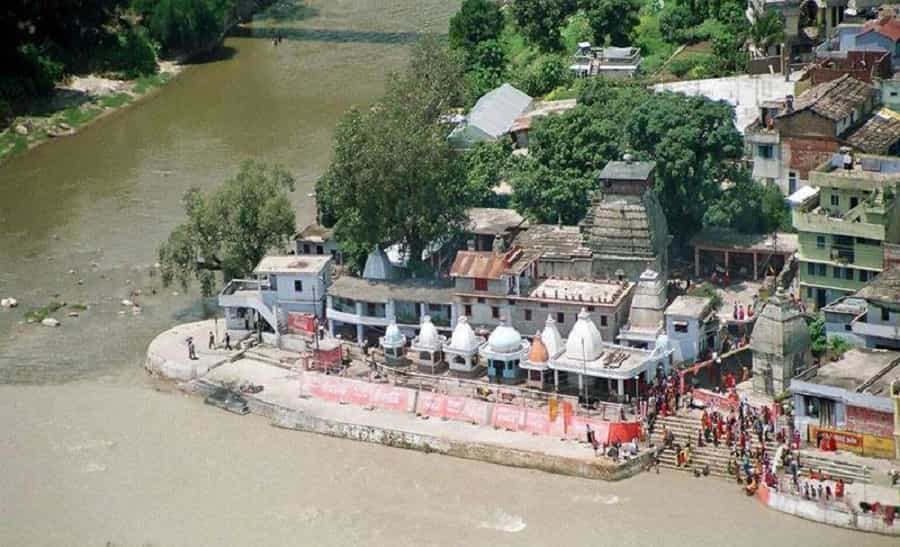
Meaning “Tiger Lord,” Bagnath sits at the confluence of the Saryu and Gomti rivers and draws heavy crowds during the Shivratri festival every year. Legend holds that Lord Shiva appeared to sage Markandeya at this spot in the form of a tiger, after the sage had worshipped him faithfully for years. The temple’s location at a river confluence adds to its sanctity, since such spots are traditionally considered especially auspicious in Hindu belief. A local uttarayani fair held nearby each January also brings significant footfall to the town.
- Deity: Lord Shiva
- Weather: Mild summers, cold winters
- Timings: ~5 AM–8 PM
- Best Time to Visit: December–February, Maha Shivratri
- Entry Fee: Free
- How to Reach: Rail — Kathgodam; Air — Pantnagar; Bageshwar town, Saryu–Gomti confluence
- Things to Do: Chandika Mandir, Gauri Udiyar
22. Bineshwar Mahadev Temple (Binsar)
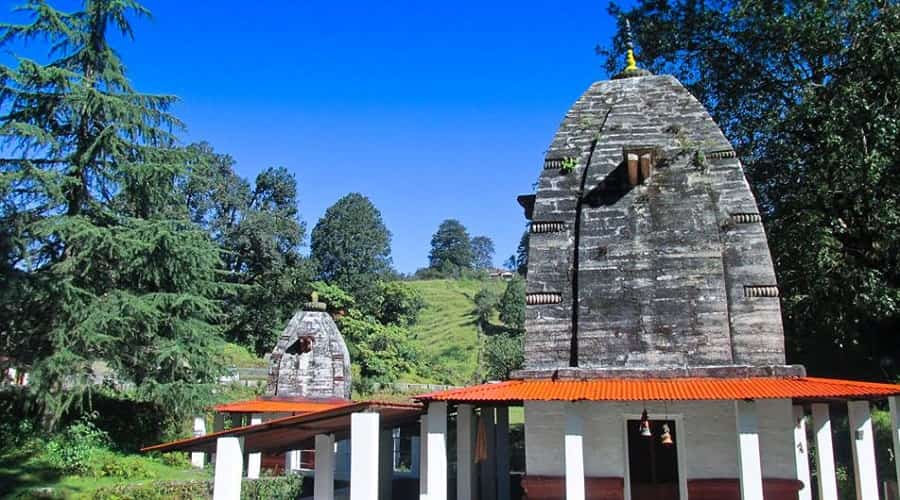
A 16th-century Shiv Lingam temple built during the Chand dynasty, when Binsar served as their summer retreat, this shrine is as notable for its architecture as for its religious significance. The carved stonework reflects the building traditions of the Chand rulers, who left similar temples scattered across Kumaon. It sits directly on the route most visitors take toward Binsar Wildlife Sanctuary, so it’s easy to combine with a wildlife visit rather than treating it as a separate trip. The quiet forest setting around the temple adds to its appeal beyond the historical interest alone.
- Deity: Lord Shiva (Shiv Lingam)
- Weather: Mild summers, cold winters
- Timings: ~6 AM–7 PM
- Best Time to Visit: October–November
- Entry Fee: Free
- How to Reach: Rail — Kathgodam; Air — Pantnagar; en route to Binsar Wildlife Sanctuary
- Things to Do: Binsar Wildlife Sanctuary, Gairar Golu Devta
23. Jageshwar Dham (Almora)
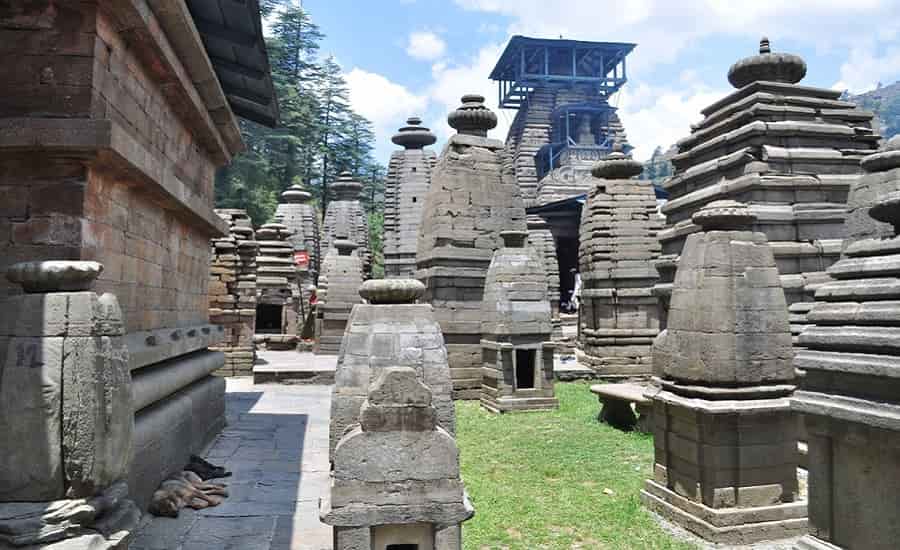
About 35 km from Almora, Jageshwar is one of the largest single-complex temple clusters in the world — roughly 124 stone shrines packed into a narrow deodar-forest valley, with the Jata Ganga stream running behind them. The main shrine is counted among the twelve Jyotirlingas in several traditional lists, and Adi Shankaracharya is said to have stopped here to renovate and re-consecrate temples on his way to Kedarnath. Dating is genuinely contested: most structures are generally placed between the 7th and 13th centuries under the Katyuri and Chand dynasties, while some local and ASI accounts describe the site’s origins as far older. The Archaeological Survey of India protects the complex today.
- Deity: Lord Shiva (Jageshwar/Nagesh Jyotirlinga), worshipped here in child form as Bal Jageshwar
- Weather: Mild summers, cold winters with occasional snow
- Timings: ~6 AM–7 PM
- Best Time to Visit: March–June, Sept–Nov
- Entry Fee: Free
- How to Reach: Rail — Kathgodam; Air — Pantnagar; ~35 km from Almora
- Things to Do: Dandeshwar Temple, Mrityunjaya Temple, Navagraha Temple — all within the complex
Best Time to Visit Uttarakhand Temples: Quick Comparison
| Region | Ideal Months | Why |
|---|---|---|
| Char Dham & Panch Kedar (Badrinath, Kedarnath, Yamunotri, Gangotri, Tungnath) | May–June, Sept–Oct | Temples open only Apr/May–Nov; roads clear of snow |
| Haridwar & Rishikesh (Neelkanth, Mansa Devi, Chandi Devi) | Oct–Mar (cooler), Jul–Aug (Shravan festivities) | Year-round access, but summer heat can be intense |
| Kumaon (Kainchi Dham, Naina Devi, Almora temples) | Mar–Jun, Sept–Nov | Pleasant hill weather, clear mountain views |
How to Reach: Practical Route Planning
Most Uttarakhand temple circuits start from one of two gateway cities:
- Haridwar/Rishikesh — nearest railhead and the base for Neelkanth Mahadev, Mansa Devi, Chandi Devi, and the onward Char Dham route toward Yamunotri, Gangotri, Kedarnath, and Badrinath.
- Kathgodam/Haldwani — nearest railhead for the Kumaon circuit covering Nainital, Almora, Kainchi Dham, Bageshwar, and Pithoragarh.
Jolly Grant Airport (Dehradun) serves the Garhwal side; Pantnagar Airport serves Kumaon, though flight frequency is limited, so most travellers still combine train + road transport.
Common Mistakes Pilgrims Make
- Skipping Char Dham registration. Online registration is compulsory for Yamunotri, Gangotri, Kedarnath, and Badrinath — not optional, and not something you can arrange on arrival during peak season.
- Underestimating altitude. Both Kedarnath (3,583 m) and Badrinath (3,133 m) can trigger mild altitude discomfort even in fit travellers. Build in a rest day if you’re combining both in one trip.
- Booking helicopter tickets from unofficial websites. Fraudulent Kedarnath heli-ticket sites are a recurring problem; book only through the official IRCTC HeliYatra portal.
- Visiting Kainchi Dham or Naina Devi expecting a quiet, empty temple. Both get extremely crowded on weekends and festival dates — plan weekday, early-morning visits if you want a calmer experience.
- Assuming every temple keeps identical hours year-round. Several shrines in this list — Kedarnath and Badrinath included — set exact daily timings close to the season, not months in advance. Check the current schedule before building a day plan around one temple.
Pro Tips for a Smoother Temple Tour
- Carry a printed Char Dham registration copy or an accessible digital copy, along with a valid photo ID — network connectivity is unreliable at high altitude.
- Senior citizens and anyone with an existing medical condition should see a doctor before the trip and check the latest health advisories on the official registration portal — Kedarnath and Badrinath both sit above 3,000 m.
- Layer clothing rather than relying on one heavy jacket. Mountain temperatures shift quickly between sunrise and midday, and a single jacket won’t cover the range.
- If you’re combining Garhwal and Kumaon temples in one trip, treat them as two separate legs — the road connectivity between the two regions isn’t direct or fast.
- For Kainchi Dham, Naina Devi, or Neelkanth Mahadev, visiting early tends to mean shorter queues, especially on regular weekdays — weekends and festival dates get busy regardless of the hour.
Why Plan Your Uttarakhand Temple Tour with Chardham Tour
Planning a multi-temple route across Garhwal and Kumaon involves juggling opening dates, registration rules, altitude concerns, and road conditions that change season to season. With customizable Char Dham Yatra packages, helicopter options, and Kumaon add-ons like the Kainchi Dham tour, transparent pricing, and dedicated on-ground support, the logistics are handled so your focus stays on the pilgrimage itself, not the paperwork.
Conclusion
Uttarakhand’s temples aren’t a checklist — they’re a genuine cross-section of how devotion has shaped this state for over a thousand years, from the Jyotirlinga at Kedarnath to a roadside ashram in Kainchi that quietly changed how two of the world’s most famous entrepreneurs thought about their work. Whether you’re doing the full Char Dham Yatra, a focused Panch Kedar trek, or a relaxed Kumaon temple circuit, plan around the seasonal windows above, register early for the high-altitude shrines, and build in time to actually sit with the stillness these places offer — that’s usually the part visitors remember longest.
FAQs
How many temples are there in Uttarakhand?
There’s no official count, but Uttarakhand has thousands of temples across Garhwal and Kumaon, ranging from major pilgrimage sites like Kedarnath and Badrinath to small village shrines. This guide covers 23 of the most historically and spiritually significant ones.
Which is the most famous temple in Uttarakhand?
Kedarnath and Badrinath are the two most famous, as they form part of the all-India Char Dham Yatra and the Chota Char Dham circuit. Kainchi Dham and Naina Devi are also extremely popular, especially among domestic tourists.
What is the best time to visit temples in Uttarakhand?
May–June and September–October are best for Char Dham and Panch Kedar temples, since they’re only open roughly late April to mid-November. Kumaon temples like Kainchi Dham and Naina Devi are accessible year-round but are most pleasant March–June and September–November.
When does the Char Dham Yatra open in 2026?
For 2026, Yamunotri and Gangotri open 19 April, Kedarnath opens around 22 April, and Badrinath opens 23 April — these opening dates are officially confirmed. Closing dates follow the traditional Diwali/Bhai Dooj window, typically 10–13 November, but aren’t finalised as far in advance; check the official portal closer to your travel date.
Do I need to register for the Char Dham Yatra?
Yes. Online registration is mandatory for Yamunotri, Gangotri, Kedarnath, and Badrinath, whether you travel by road or helicopter. Carry a printed copy along with a valid photo ID.
Is Kainchi Dham the same as a Hanuman temple?
Kainchi Dham is both — it houses a Hanuman temple as its primary shrine, alongside the ashram and samadhi of Neem Karoli Baba, who is regarded by devotees as an incarnation of Hanuman.
What is the altitude of Kedarnath and Badrinath temples?
Kedarnath sits at about 3,583 metres (11,755 ft), making it the highest-altitude of the 12 Jyotirlingas. Badrinath is at approximately 3,133 metres (10,279 ft) — Incredible India’s official figure; some older references round it to 3,100 m.
Which is the highest Shiva temple in the world?
Tungnath, part of the Panch Kedar circuit near Chopta in Uttarakhand, is widely recognized as the highest Shiva temple in the world at around 3,680 metres.
Can senior citizens do the Char Dham Yatra?
Yes, but anyone with an existing health condition, senior or not, should see a doctor before undertaking a high-altitude pilgrimage. Check the current registration portal for the latest health documentation requirements before travelling, since these have changed in past years.
Is it safe to book Kedarnath helicopter tickets online?
Only through official channels like IRCTC or verified tour operators. Several fraudulent websites impersonate official Kedarnath helicopter booking portals, so avoid third-party links shared on social media.
Are Mansa Devi and Chandi Devi temples in Haridwar or Rishikesh?
Both are in Haridwar. Mansa Devi sits on Bilwa Parvat near Har Ki Pauri, and Chandi Devi sits across the Ganga on Neel Parvat, reachable via a separate ropeway or trek.
What is Nanda Ashtami and which temple celebrates it?
Nanda Ashtami is a Kumaoni festival honouring Goddess Nanda Devi, celebrated prominently at the Naina Devi Temple in Nainital with an eight-day procession culminating in the idol’s immersion.
2 thoughts on “List of Hindu Temples in Uttarakhand”

Related Posts
Narad Kund, Badrinath

Neelkanth Peak, Badrinath
Hi,I am Sanganbasava Nuchhi
I Have a project I need important roads in uttarakhand,and their location in uttarakhand
Very requireded information and it’s very useful for my assignments thanks to the Google or who posted this one.